
Teaching the Spanish Subjunctive (Online)
Develop a structured and practical approach to teaching one of the most complex areas of Spanish grammar.
Who Is This Course For?
This course is designed for:
- Spanish teachers seeking deeper grammatical precision
- Educators preparing students for upper-intermediate and advanced levels
- Teachers who want greater clarity in explaining mood contrast
- Professionals working with complex sentence structures
Participants should have prior teaching experience or advanced grammatical knowledge.
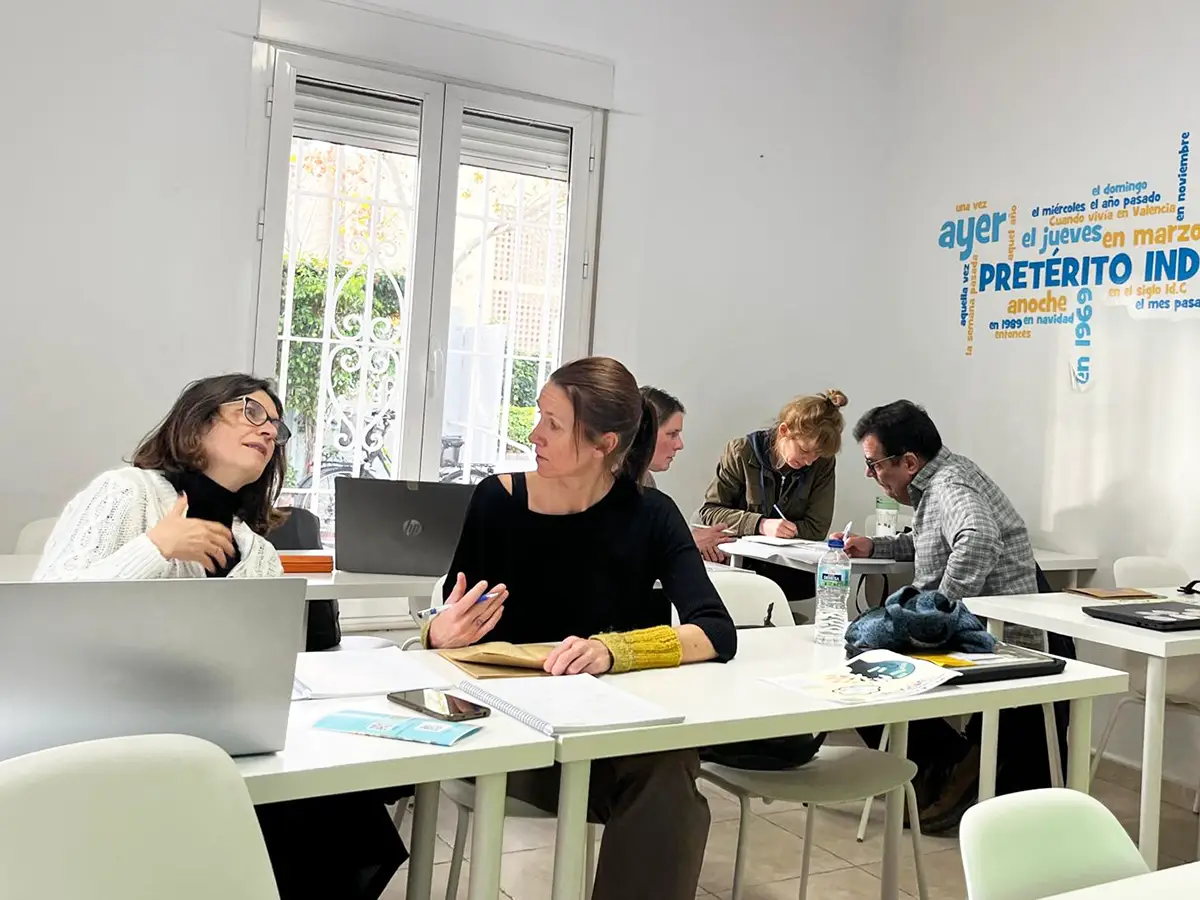
Course Overview
The Spanish subjunctive is often perceived as one of the most challenging areas of Spanish grammar.
This course provides a systematic and pedagogically structured approach to teaching the subjunctive. Participants explore mood contrast, sentence types, verb categories, and communicative functions, moving beyond mechanical rules toward meaningful explanation.
The focus is not only on when to use the subjunctive, but why.
Learning Objectives
By the end of the course, participants will be able to:
- Explain the contrast between indicative and subjunctive clearly
- Identify triggers related to desire, probability, and subjectivity
- Teach noun, adjective, and adverbial clauses effectively
- Address verbs that change meaning depending on mood
- Clarify conditional and concessive structures
- Design structured classroom activities focused on mood distinction
Course Content
Module 1 – Foundations
- Types of clauses
- Conceptual difference between reality and subjectivity
- Desire and probability
Module 2 – Noun Clauses
- Verbs of influence
- Verbs of emotion
- Verbs of perception and judgment
- Verbs with semantic duality
- Ser and estar with mood contrast
Module 3 – Adjective (Relative) Clauses
- Defining vs non-defining reference
- Specific vs non-specific antecedents
Module 4 – Adverbial Clauses
- Temporal clauses
- Causal clauses
- Consecutive clauses
- Purpose clauses
- Modal clauses
- Conditional structures
- Concessive clauses
How the Program Works
- Fully online learning environment
- Structured grammatical analysis modules
- Applied classroom design assignments
- Continuous tutor feedback
- Final assessment required for certification
Participants work independently within the academic calendar.
Entry Requirements
- Previous training in Spanish language teaching
- Official university degree or final-year student status
- Minimum C1 level of Spanish
Certification
Upon successful completion, participants receive an official certificate issued by Cervantes Escuela Internacional.
The certificate specifies:
- Course title
- Total number of hours (60)
- Completion date
- Final evaluation
What Is Included
- Structured grammatical materials
- Academic bibliography
- Continuous tutor feedback
- Final certificate